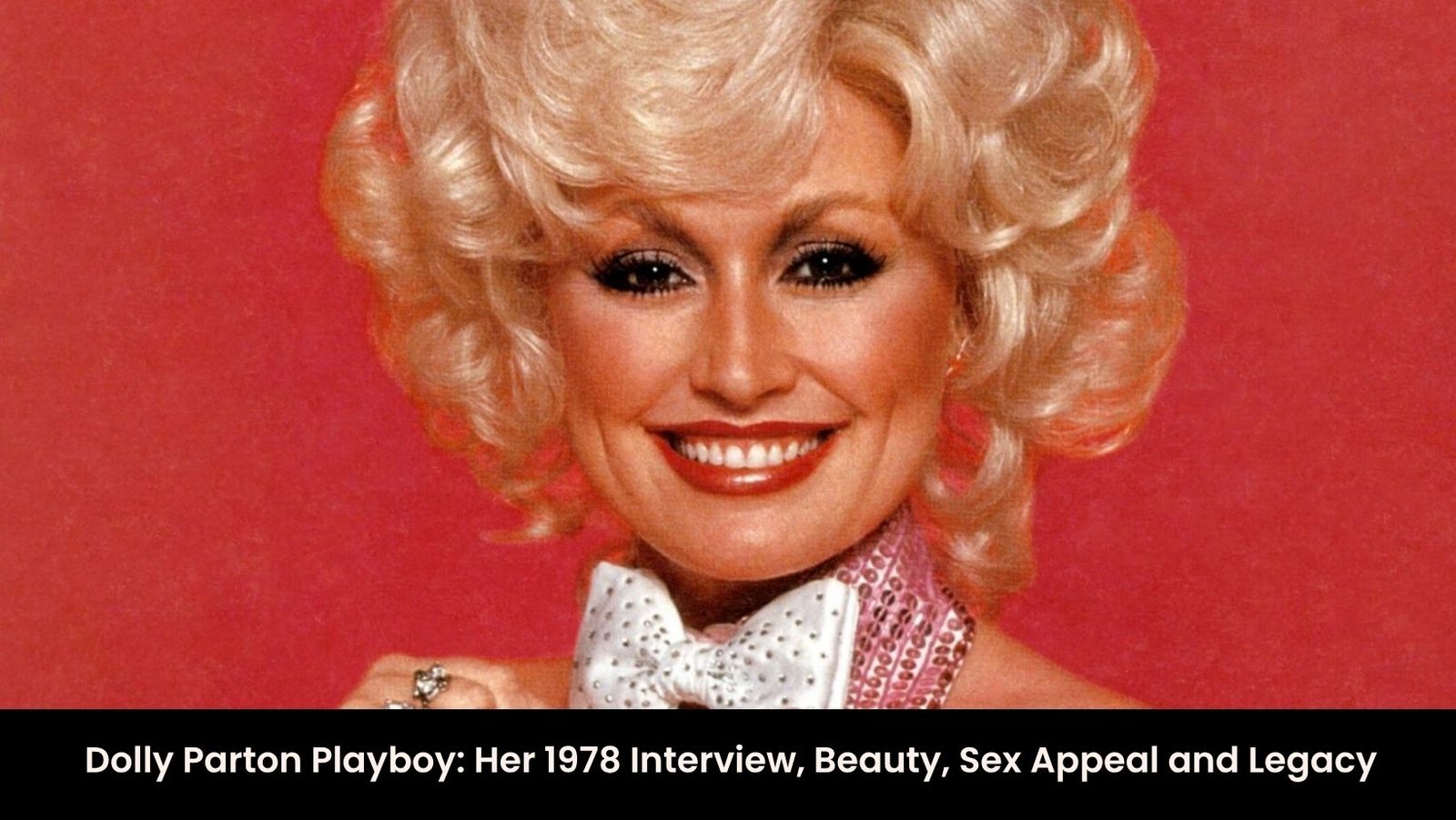
Dolly Parton Playboy: Her 1978 Interview, Beauty, Sex Appeal and Legacy
Today is September 25th, and has officially been declared by the state of Tennessee as Dolly Parton day. To celebrate this date in typical Room Noir fashion, I want to take a look back at the time Dolly Parton posed for Playboy magazine. It’s probably not what you’re thinking though.
Dolly Parton passed away this year on August 25, 2026, at 80, and the entire world misses her already. She spent more than sixty years being underestimated by people who took one look at the big wigs, makeup, nails and rhinestones and figured was just a dumb blonde. However, Dolly outlived every last one of them and left a remarkable legacy along the way.
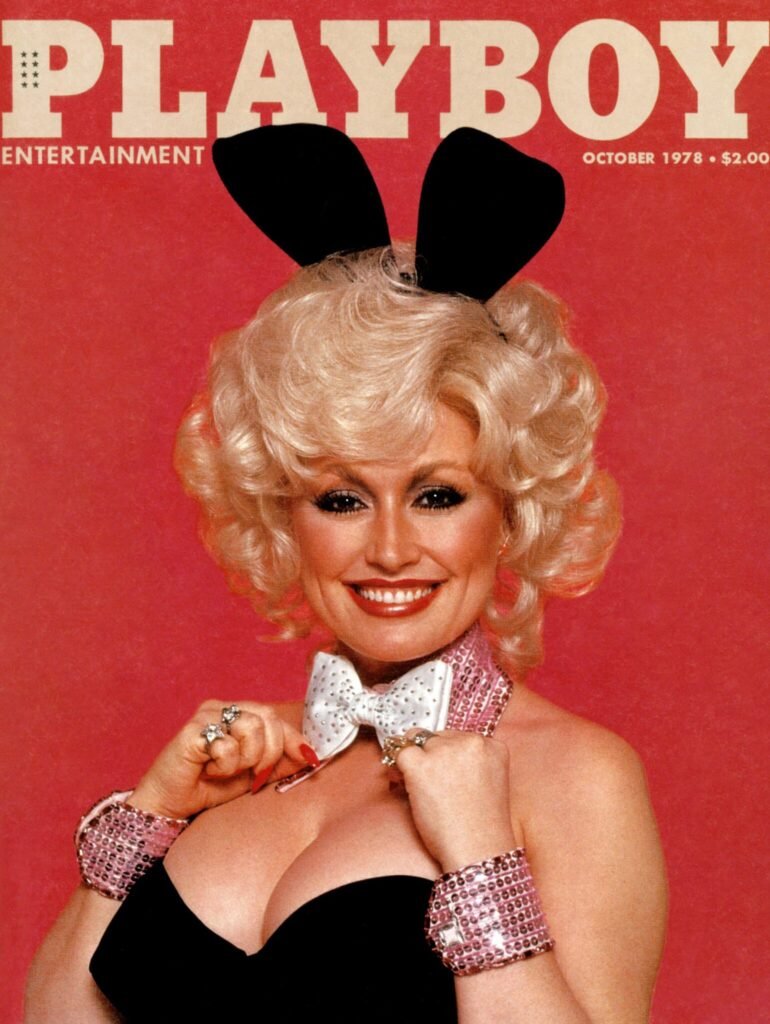
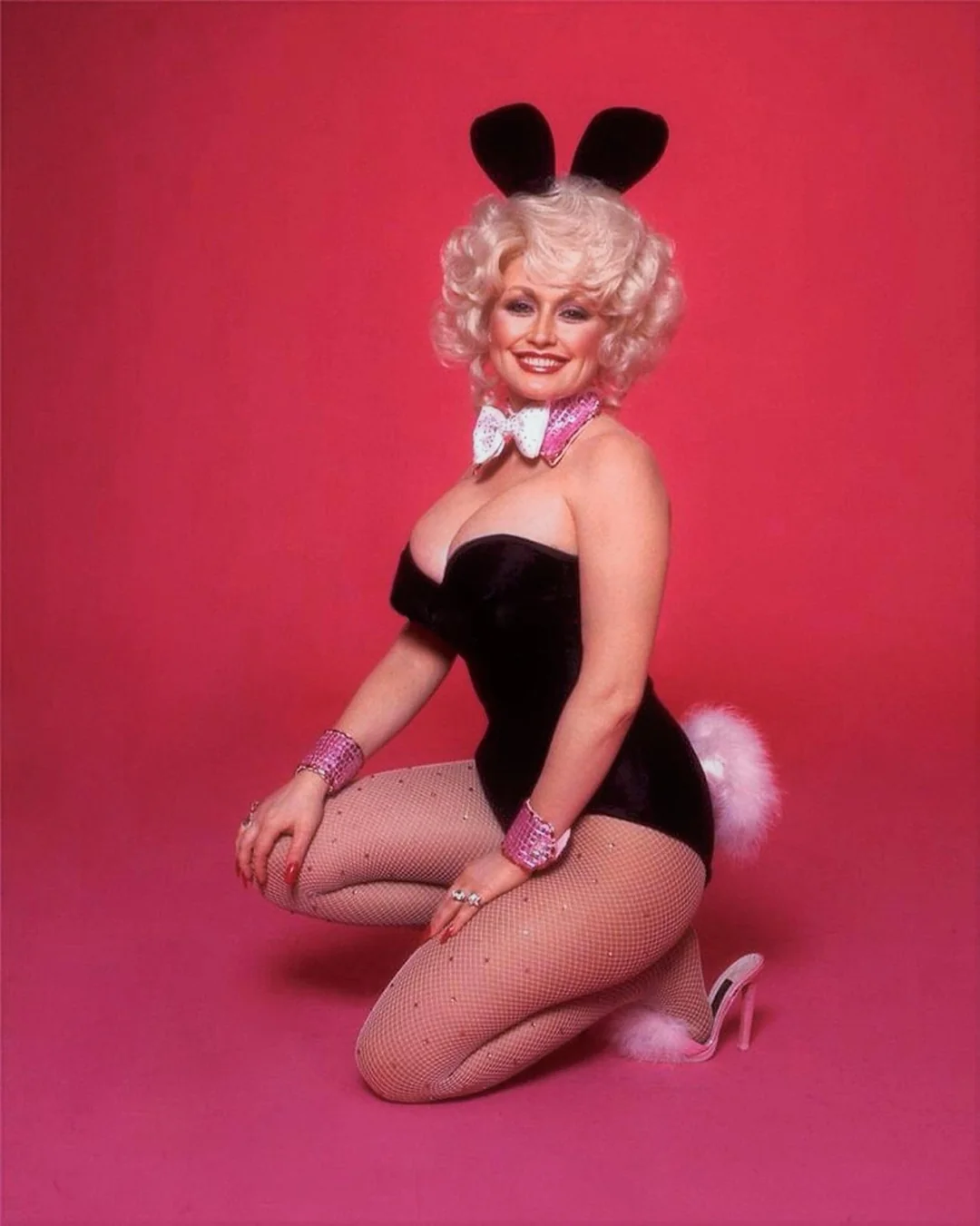
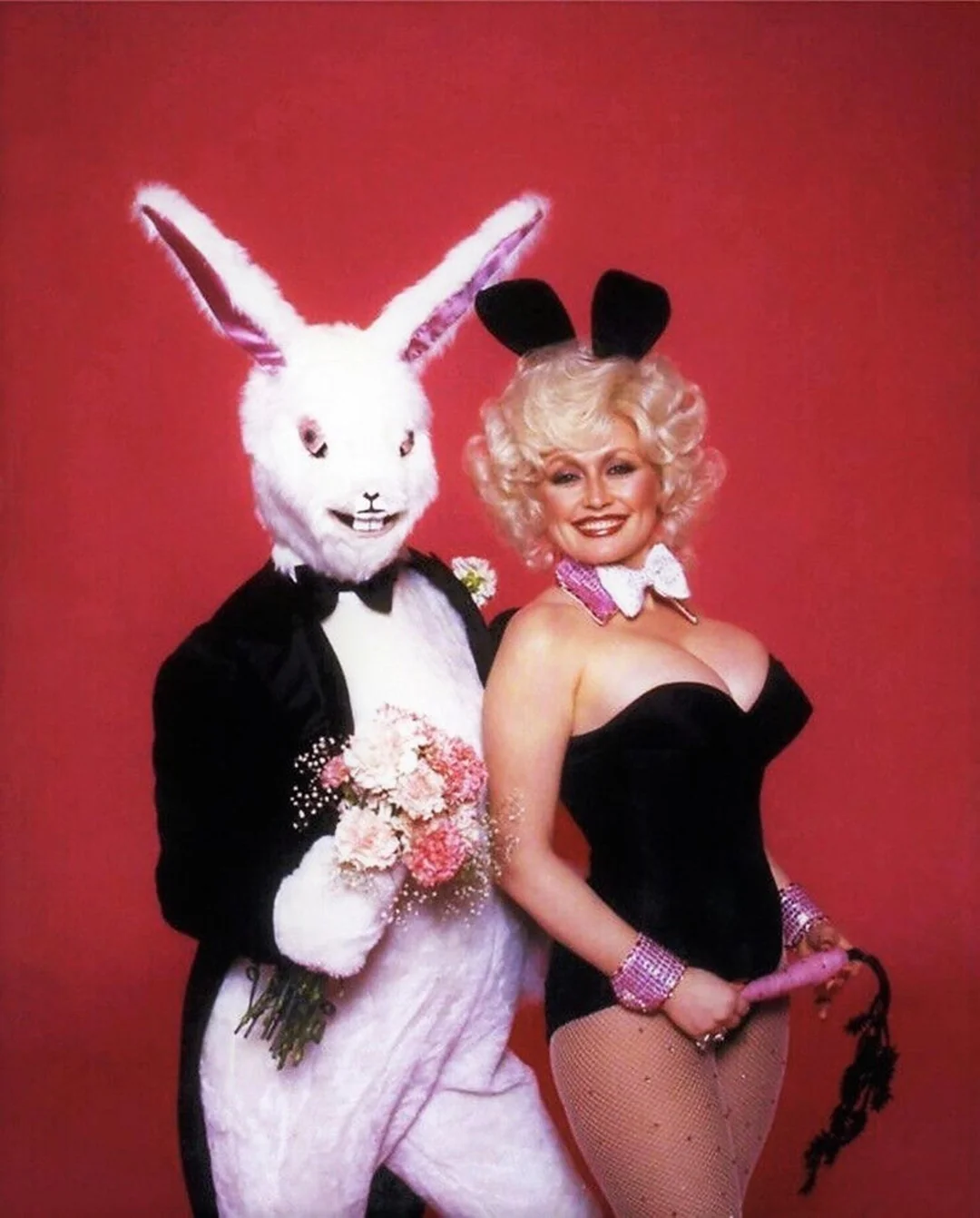
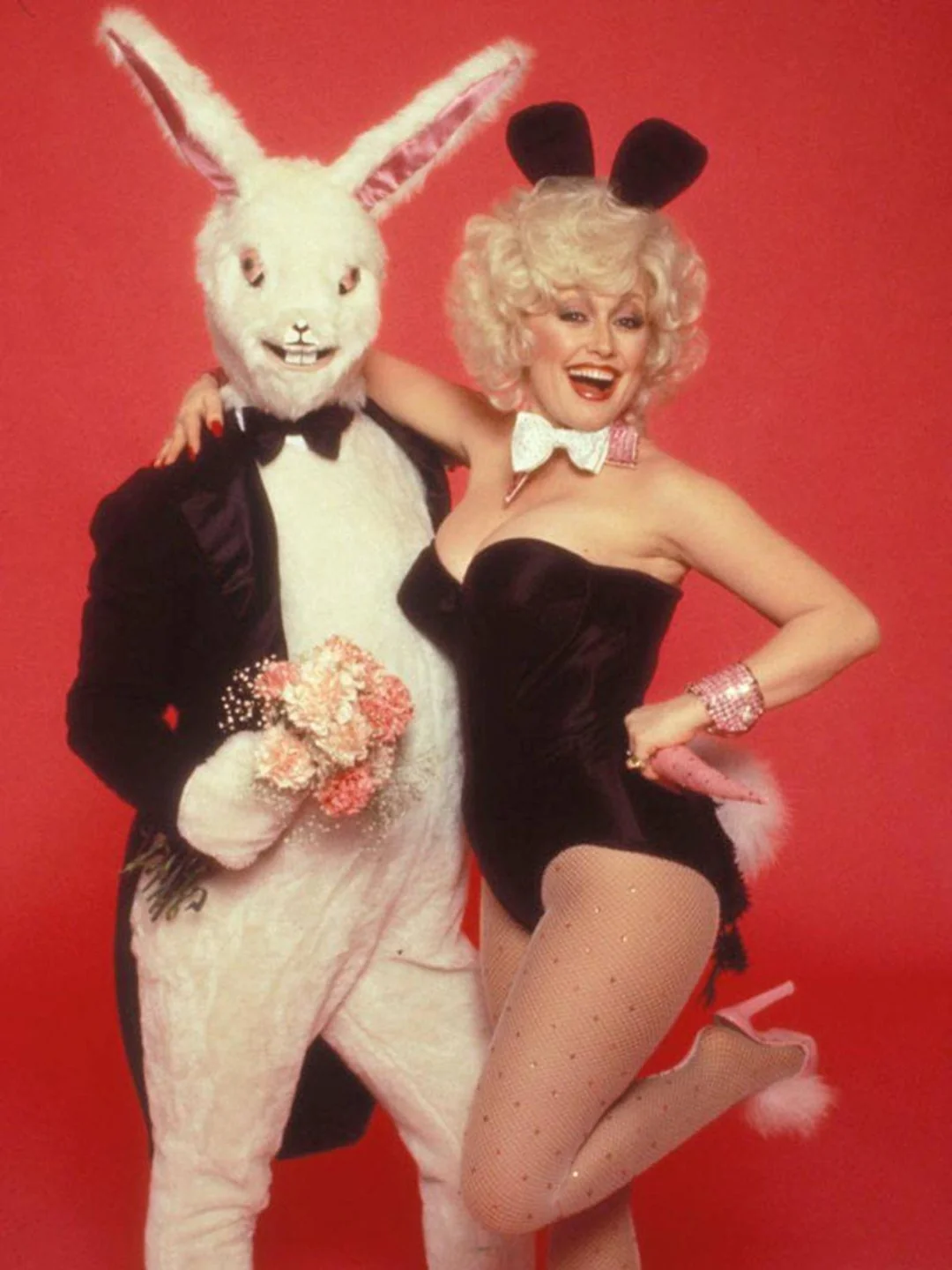
Part of that legacy was Dolly constantly doing non traditional things, but in her own unique way. In October 1978 Dolly Parton posed on the cover of Playboy Magazine in a Bunny costume, ears and outfit, but what she did not do for the magazine was pose nude. The Dolly Parton Playboy interview inside that issue, conducted by Lawrence Grobel, is actually a great read. What stands out the most is who Dolly was when she agreed to do the spread: a 32-year-old woman from the Tennessee mountains who’d been whipped by her father for wearing makeup, walking into the most famous men’s magazine in America with her own rules and her own sense of humor. This article is a tribute to how she pulled that off, along with a few things that might surprise you about Dolly.
In this article
- Why Dolly Parton Said Yes to Playboy, and What She Said No To
- Inside the Dolly Parton Playboy Interview
- The Girl Who Painted Her Lips With Medicine
- Was Dolly Parton a Sex Symbol? Her Own Answer
- How Dolly Parton Influenced Fashion, One Rhinestone at a Time
- The Dolly Parton Playboy Cover, Recreated at 75
- A Songwriter Before Anything Else
- What a Photographer Sees in Dolly Parton
- Why Dolly Parton’s Playboy Interview Still Matters
- Where to Read Dolly Parton’s Playboy Interview
- Frequently Asked Questions About Dolly Parton and Playboy
Why Dolly Parton Said Yes to Playboy, and What She Said No To
I guess the big question to ask is, why did she agree to pose in Playboy Magazine to begin with? By 1978 country fans had known her for years, but the rest of America was still catching up. “Here You Come Again” had put her on pop radio the year before, and the Smithsonian’s National Museum of American History points to that 1977 crossover as the moment Dolly became a superstar. Playboy wanted her, bad, which tells you how big she’d gotten. At the time she was a young 32.
Her manager, Sandy Gallin, pitched it to Dolly as “the classiest magazine,” according to diary entries Grobel later shared with Vanity Fair. Dolly wasn’t sold. She told Grobel she was afraid at first, and that she didn’t want to be naked on the front of a magazine unless everybody knew it was a joke. The nudity wasn’t her only worry. She was thinking about the folks back home, and she said so: a lot of her country fans, and some of the people who loved her were very religious, and she was afraid they might not understand.
So in order to agree to do the magazine Dolly had to set the terms. Grobel wrote that she’d do the cover only if the Bunny costume could be altered, with the cut adjusted so it showed less. That’s why the answer to a question people still ask to this day is a plain no. Dolly Parton did not pose nude for Playboy. She wore the ears, took the costume, and kept everything else on.
Grobel also left a record of the woman who negotiated all this. In his diary he called her “funny, charming, disarming” and “difficult to interrupt.” If you’ve ever watched her on a talk show, you can see how all of this is true.
Inside the Dolly Parton Playboy Interview
If you open the interview hoping to read about any steamy sex stories, you’ll probably be disappointed there too. She talks about growing up in the Tennessee mountains. She talks about her marriage to Carl Dean, and how much she loved him. One notable line from the interview is Dolly saying about Carl: “There ain’t no way in this world I’d ever lose this man.” She talks about leaving country music behind for pop, the movies she wanted to make, and the writing she planned to do.
When asked about her voice, she shrugs it off and says: “I don’t have a great voice. I have a different voice and I can do things with it.” On ambition, she doesn’t shrug at all. “I don’t think there’s anything I can’t do,” she says, and later, “I want to be somebody important in time.”
She definitely backed the second answer up. Two years after the interview she’d be on movie screens in 9 to 5, singing a theme song she’d written herself.
The Girl Who Painted Her Lips With Medicine
Dolly Parton grew up as a kid in the Smoky Mountains of Tennessee. She told Rolling Stone she once painted her lips with Mercurochrome, the red antiseptic, and when her father demanded an explanation she insisted, “This is my natural color!” Her father whipped her for it. She was laughing helplessly when she told that story to the magazine.
That little girl with the painted lips had a role model, and it wasn’t the kind her preacher grandfather would have chosen. There was a woman in her hometown whom people called the town tramp, with bleached hair, bright lipstick, and long red nails. “I patterned my look after the town tramp,” Parton told Rolling Stone in 2003. “I thought she was the prettiest thing in the world.” In her 2023 book Behind the Seams: My Life in Rhinestones, written with her niece Rebecca Seaver and music journalist Holly George-Warren, she describes a family that disapproved and a girl who wore it anyway.
By the time record companies were urging her to dress more tastefully, she’d had a lifetime of practice ignoring that kind of advice. When Grobel asked about the teased wigs and the heavy makeup, her answer sums her up: “It’s fun for me. It’s like a little kid playing with her paints and colors.”
She never treated the look as sacred, either. In her memoir Dream More, she tells about slipping into a Dolly Parton look-alike contest at a bar on Santa Monica Boulevard in West Hollywood, piling on extra makeup and giving no hint of who she was. She got the least applause of anyone. Interestingly enough Snopes looked into the story and rated it true.
As a photographer I can’t help but notice what she was doing. Calling a look constructed doesn’t make it fake. Every portrait you’ve ever admired was built from choices about light, lens, pose, and wardrobe. Dolly made hers in public, on her own face, and she told the truth about how she did it. She has also said she looks totally artificial and has always been the simplest person in the world.
Was Dolly Parton a Sex Symbol? What She Said About it
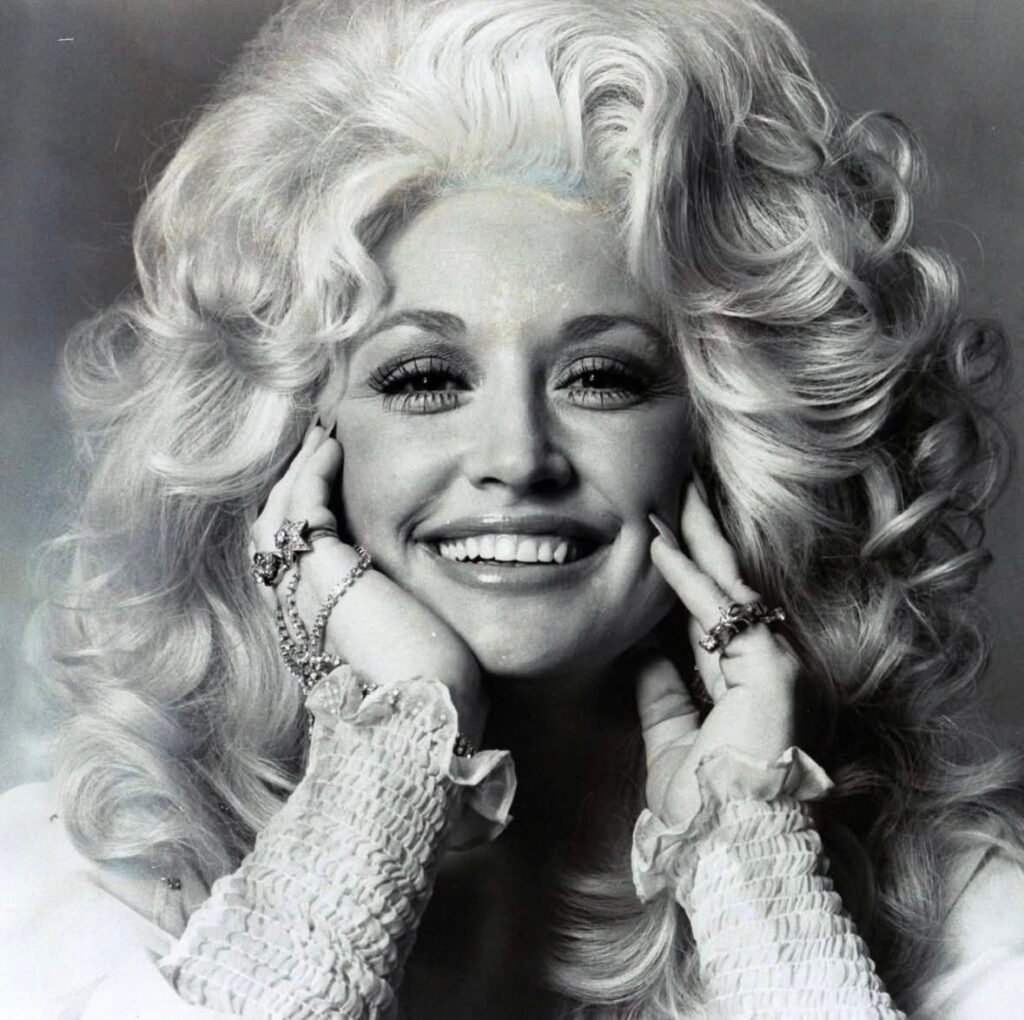
People called Dolly a sex symbol from the moment she got famous, but she never signed on. “I never thought of myself as being a sex symbol,” she told Grobel. “It never crossed my mind.” She added that men aren’t usually turned on by artificial looks. You can believe that or not, but it suggests she saw the exaggeration as a costume more than an invitation.
Decades later she was still poking fun at the whole subject. In an interview with 60 Minutes Australia she credited her youthful looks to “good lighting, good makeup and good doctors” and said she was “kind of cartoonish and cartoons don’t really age that much.”
Dolly Parton took part in a world that ran on sexual imagery, and she was clear about where her part in it ended. She held that line through a whole career in front of and behind cameras.
The Dolly Parton Playboy Cover, Recreated at 75
In 2020 she told 60 Minutes Australia that she’d love to be on Playboy’s cover again for her 75th birthday. “I thought it would be such a hoot,” she said. A year later she took matters into her own hands. On July 20, 2021, at 75, she shared a video recreating the 1978 cover as a birthday surprise for her husband, who she said had always loved the original. “He still thinks I’m a hot chick,” she joked.
It turned a magazine cover from 1978 into a birthday card, forty-three years later, for the man she’d told Grobel she’d never lose. Carl Dean died in March 2025 at 82, after nearly sixty years of marriage. Dolly followed him about a year and a half later.
A Songwriter Before Anything Else
The day after she graduated from high school in May 1964, Dolly Parton left for Nashville. Her debut album, Hello, I’m Dolly, came out in 1967, and that fall Porter Wagoner invited her onto his television show. She went on to write more than 3,000 songs and land 26 No. 1 hits on Billboard’s country chart, and in 2024 Billboard ranked her the top country artist of all time. She told NPR in 1989 that “it was my songwriting that got me out of the Smoky Mountains.”
She kept notebooks and tape recorders around the house, by the bed, in the tub, and in the kitchen when she cooked. “It don’t ever stop,” she told Rolling Stone. By her own account she wrote “Jolene” and “I Will Always Love You” during the same stretch of days, possibly on the same one. She told the Bobby Bones Show it was a good writing day.
Then there was everything else. She acted in 9 to 5, The Best Little Whorehouse in Texas, and Steel Magnolias. She built Dollywood in the mountains where she grew up. In 1995 she started the Imagination Library, which mails free books every month to children from birth to age five and passed its 200 millionth book in 2023. After she died, her team’s statement quoted her manager saying she worked up until the day she died.
What a Photographer Sees in Dolly Parton
As a photographer, I can tell you that you meet two kinds of subjects. Some stand in front of the lens waiting to be told who they are. Others walk in already knowing, and the whole session gets better as soon as they arrive. Dolly Parton was clearly the second kind, and she seems to have been that way from early on.
The Smithsonian holds a portrait of her by Henry Horenstein, made in 1972 for Boston After Dark. It was his first published photograph, and the museum says he got an hour-long sitting with her, a length few photographers get today. An hour gives a photographer room to work. It also gives the subject room to steer.
The picture that comes out of a shoot like that belongs to two people, and the best ones happen when both the photographer and the subject know what they’re doing. I’ve written about how that collaboration works in practice in the post working with traveling models. Dolly walked into Playboy in that same spirit, with a position of her own and a good idea of what she was willing to give.
Why Dolly Parton's Playboy Interview Still Matters
Playboy put the interview back online on January 19, 2026, to mark her 80th birthday. Seven months later she was gone, and the piece reads differently now. The humor is all there, along with the ambition and the plain-spoken love for her husband. She gave the magazine part of what it wanted and held back the rest for herself.
Most of us will never be photographed for a magazine cover. We do decide every day, though, what we’ll show the world and what we’ll hold back. Dolly Parton worked that out at 32 in a Bunny costume and kept getting better at it for the next forty-eight years. She made it look like fun, and that’s the part I’d like to borrow more of for myself.
She told Grobel in 1978 that she wanted to be somebody important in time. It took her a lifetime, and it was worth watching.
Where to Read Dolly Parton's Playboy Interview
The full text is on Playboy’s own site. Its official version of the Dolly Parton Playboy interview is the one they republished for her 80th birthday, and it’s worth an unhurried afternoon.
Want to explore more of Playboy’s history? Playboy’s archives span decades of interviews, photography, culture, and conversations with influential figures from entertainment and beyond. Explore Playboy Plus.
Affiliate disclosure: The Playboy Plus link above is an affiliate link. If you sign up through it, Room Noir may earn a commission at no extra cost to you. Our coverage of Dolly Parton and Playboy is independent of that relationship.
Frequently Asked Questions (FAQ)
No. Dolly Parton appeared on Playboy’s October 1978 cover in the Bunny costume, but she did not pose nude. She told interviewer Lawrence Grobel she didn’t want to be naked on the front of a magazine, and Grobel wrote that she agreed to the cover only if the costume was altered to show less.
It ran in Playboy’s October 1978 issue and was conducted by journalist Lawrence Grobel. Playboy republished the interview on its website on January 19, 2026, to mark Parton’s 80th birthday, and that online version is the easiest place to read it today.
She was crossing over from country into pop and dreaming about movies, and Playboy was one of the biggest stages in American media. Her manager pitched it as a classy move, and she agreed on her own terms: an altered Bunny costume and no nudity. She hoped people would see it as “something cute and off-the-wall for me.”
She covered growing up in the Tennessee mountains, her marriage to Carl Dean, her move from country to pop, her plans for movies and writing, her wigs, makeup, and clothes, and sex. Ambition runs through all of it. She told Grobel she wanted to be “somebody important in time.”
She treated it as play. She told Grobel, “It’s fun for me. It’s like a little kid playing with her paints and colors.” She has also said her look was a country girl’s idea of glamour, patterned after a woman in her hometown whom people called the town tramp.
Yes, she was widely described that way in the 1970s, but she pushed back in her Playboy interview: “I never thought of myself as being a sex symbol.” Her humor, her clothes, and her firm boundaries made her public image more complicated than a single label suggests.
It reaches well past music. She wrote more than 3,000 songs, including “Jolene” and “I Will Always Love You,” acted in films such as 9 to 5, built Dollywood, and founded the Imagination Library in 1995, which passed its 200 millionth book in 2023. Her example of owning her image is part of it too.